The forest fires on Borneo have only just begun
Yet the situation is already serious.
The El Niño weather phenomenon is in full swing, and it could lead to the worst forest fires ever recorded in Indonesia. Here you can read about the situation, how Save the Orangutan is working to mitigate the disaster – and how you can help.
Your support goes towards, amongst other things:
- Early fire detection: You help ensure that fire patrols have the safety and field equipment they need to patrol the rainforest and detect forest fires in time.
- Extinguishing the fires: You help provide water pumps, fire hoses and other equipment so that fire patrols can quickly tackle forest fires before they spread.
- Prevent future forest fires: You’re helping with prevention through patrolling, moisturising peat bog forests and planting new trees. The best defence against the spread of forest fires is healthy forests.
Every donation makes a difference.
Support us today and join the fight against the forest fires. For people and orangutans.
Almost 95,000 hectares burnt in July
(That is equivalent to 133,000 football fields)
Forest fires have major consequences
People
The toxic smoke from forest fires can lead to respiratory diseases for thousands of people.
Orangutans
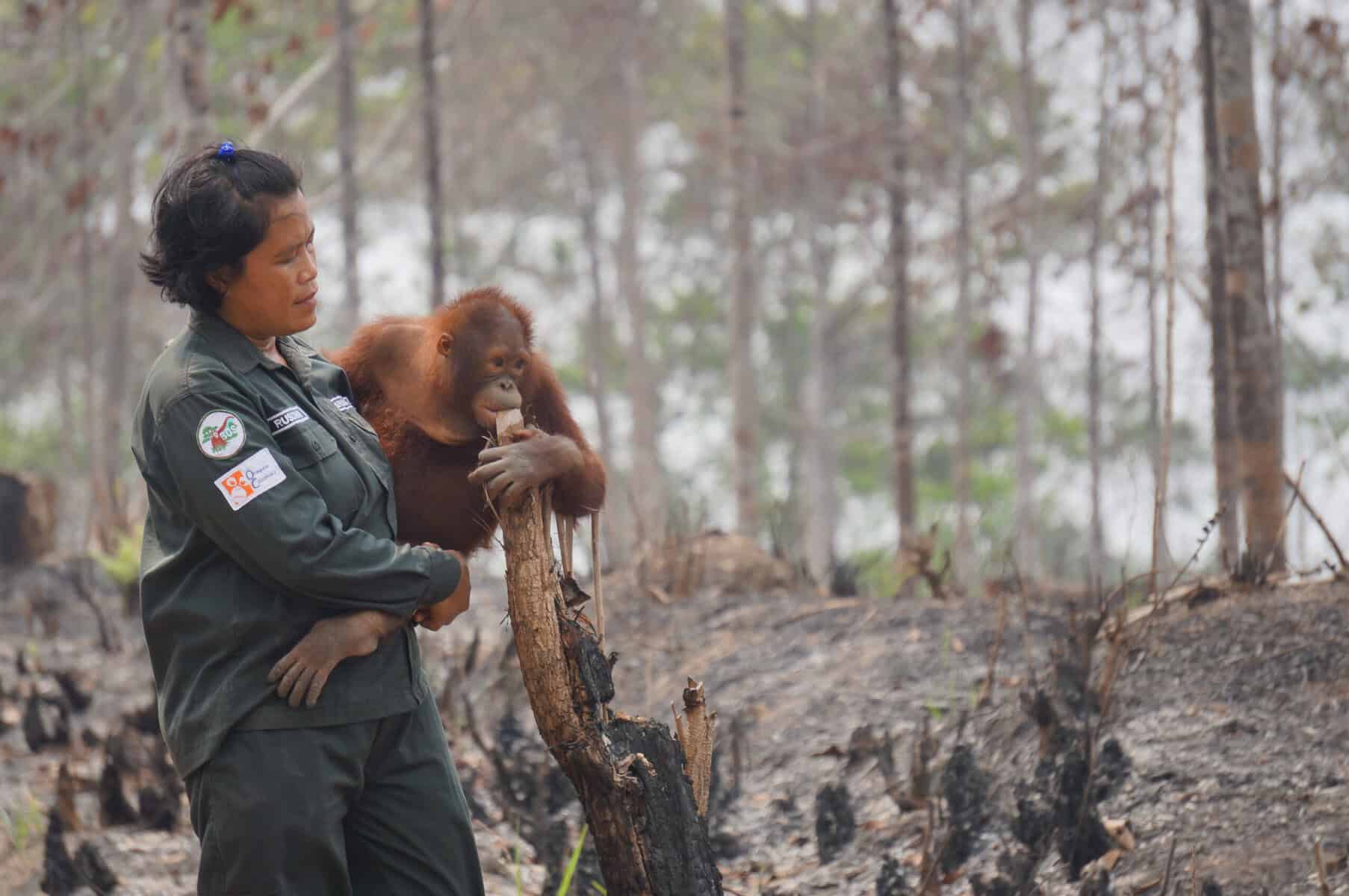
Orangutans can get caught in the flames or the massive smoke. They can also get respiratory illnesses.
Disappearing forests
The orangutan's home is disappearing, and this could have catastrophic consequences for the species.
Conflicts
Less forest areas forces orangutans closer to humans, and this can create conflicts.
Climate
Burning peatland forests release enormous amounts of carbon dioxide.
How does Save the Orangutan help?
In collaboration with our local partner in Borneo, the BOS Foundation, and local fire patrols, Save the Orangutan helps to prevent, identify and extinguish forest fires. This work includes, amongst other things:
- Support for fire patrols that identify risks and signs of fire as early as possible.
- Satellite and ground-based monitoring is used to detect fire-prone areas.
- Operations to extinguish fires.
- Water management in peatlands and maintenance of canal blockages to keep vulnerable areas as wet as possible so that they do not catch fire.
- Engaging and training local communities to strengthen local forest fire prevention and management.
- Emergency services ready to support the relevant authorities in carrying out rescue operations for orangutans in distress in affected forest areas.
We are well prepared, but the fires are unpredictable and El Niño is making matters worse.
All funds are urgently needed. Every donation counts.
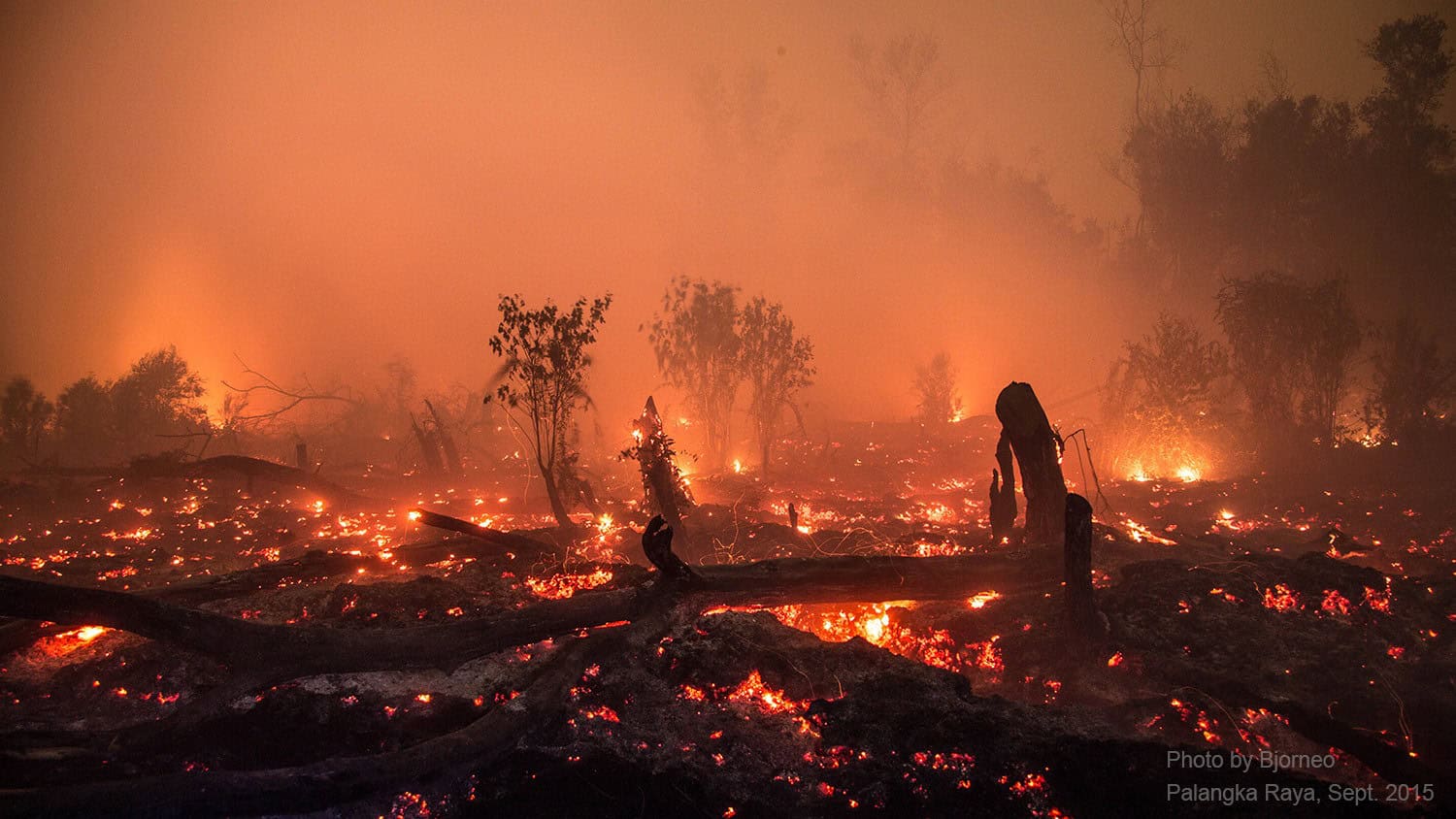
Forest fire in Palangka Raya, September 2015
What is El Niño?
El Niño is a weather phenomenon that occurs every 2–7 years. A Super El Niño is a very strong manifestation of the phenomenon and occurs much less frequently.
The phenomenon occurs when the sea surface in the eastern and central Pacific Ocean becomes warmer than normal. During a typical El Niño, the temperature rises by at least 0.5 degrees above normal, whilst a Super El Niño involves a warming of more than 2 degrees.
When this happens, the weather changes across large parts of the world. In Indonesia, this means that the annual dry season, which usually sees limited rainfall, becomes even drier, starts earlier and lasts longer.
An intensified dry season can have disastrous consequences. It results in crop failures for local communities and an increased risk of forest fires. Kalimantan (the Indonesian part of Borneo), where the majority of the world’s orangutans live, is particularly hard hit by drought and forest fires.
This year’s El Niño is expected to be extremely strong, as general global warming further intensifies its effects.
The last time Indonesia experienced a so-called Super El Niño was in 2015–2016. Over 2 million hectares of forest were burnt down and 500,000 people were hospitalised with respiratory problems caused by smoke.